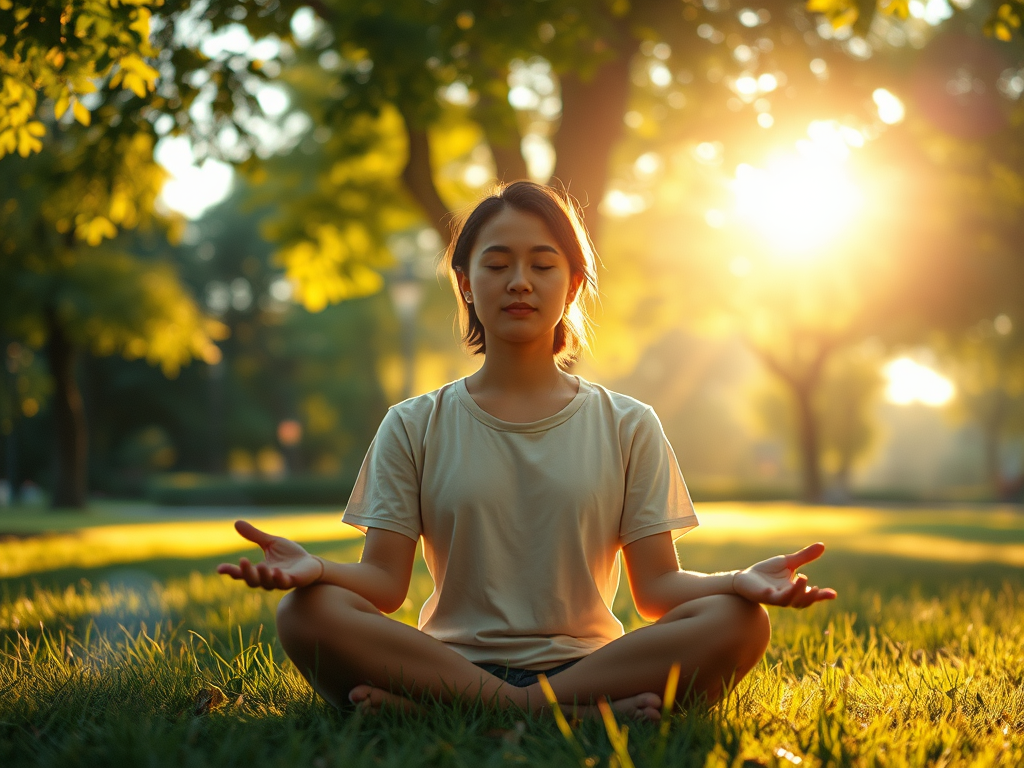
“Just relax!” How many times have you heard that one? And just how helpful was it? Probably just made you feel more stressed! So what can you do?
How stress affects us
Stress has such a holistic approach to our bodies. And not in a good way. It can affect us emotionally, physically, and mentally. We can get to where we feel fatigued on a regular basis, develop ulcers, have constant headaches, or become sick more often. Stress can cause us to develop “scatter brain”, having a difficult time remembering or keeping track of tasks. It can keep us from sleeping with racing thoughts, or induce much more sleep than usual with depression. It certainly can cause us to more easily lose our temper, feel sad, feel hopeless, or wish for an escape of some kind. And those emotions can and often do lead to some sort of coping mechanism to address them. I’ve heard of a whole range of coping mechanisms: exercise, alcohol, excessive shopping, cell phones, video games, cooking, marijuana, talking with a friend, sex, listening to music, reading, food, self-harm, journaling, crying, exploding at others, or a host of other responses.
How to address stress?
Some of these coping mechanisms are going to be more or less desirable/helpful than others. The goal of stress reduction is to figure out how to either reduce the source of stress that has been steeping its flavor into our lives, or to discover how to increase our capacity to respond in healthy ways to that stress. Using unhealthy coping mechanisms, while they feel helpful in the moment, only serve to increase your stress over the long term. Which sucks big time.
Decreasing stress externally
One of the ways to address and manage stress in your life is to evaluate things in your environment which could be changed. Could household chores be divided differently? Could you afford to clean less or take shortcuts for your peace of mind? What is your job like? Are you in a toxic environment at work? Is there a support system of people who you could tap into to help you, or do you need to evaluate the long-term effects of keeping that job on your mental health and sanity? Are you burnt out from caretaking and need some more support? Getting some sunshine and a bit of exercise every day has been proven to boost mood, as has getting proper nutrition and hydration levels. Is your life at a place that you can even spend the time on this kind of self-care? Managing your environment, allowing progress instead of perfection, setting boundaries with others, and/or reaching out for support from others may provide some viable means to reduce your stress levels.
Decreasing stress internally
What does the inside of your head sound like to you? Are you your own worst critic, berating yourself for supposed stupid mistakes or things you said? Where is your kindness towards yourself? Maybe you find yourself worrying, and worrying, and worrying until your thoughts are a frantic freight train racing through your mind, day and night. I use this question for my clients who struggle here: If a friend was telling you about the exact problem you are telling me, would you scold them for thinking/feeling such things? Much of the time, the answer is “no, I would reassure them that this is only temporary, that they will do better next time”. And yet, people often have a strong argument for why they don’t deserve this same kindness towards themselves. Please, argue against these thoughts! Use logic to fight against these intrusive thoughts! And remember to be kind to yourself. Give yourself a break for mistakes or awkward moments. You are only human. Your thoughts and beliefs about yourself can be a huge source of stress, or a big source of inner resiliency.
Additionally, you may have neurochemical or physical stressors that need to be addressed medically before you find that you are able to make traction in the mental health department. Struggling with panic attacks everyday, suffering from chronic pain, have inflammation and allergies to food or pollen- these are just a few things that you might talk to your doctor about and see what your options are. We are embodied people; the state of our bodies very much affects our mental health.
Increasing your connection with others, and your connection with God, is a huge resource. We aren’t made to be an island unto ourselves; connection with others is a hardwired need in our brains. The top reason that infants in orphanages fail to thrive, (failing to develop, lose weight, don’t smile or talk), is a lack of love, touch, and nurturing. That’s a lack of connection! And this need for connection doesn’t go away as we get older. Tapping into your supports, those people in your life who are encouraging, engaging, and there for you, can make a big positive impact on your perceived levels of stress.
The same, and more, can certainly be said about the Lord as well. He is the One who made us, and He made us for relationship with Him. He wants to talk with us! “His purpose [in making the world ] was for [people] to seek after God and perhaps feel their way toward him and find him—though he is not far from any one of us. 28 For in him we live and move and exist.” (Acts 17:27-28.) He wants us to be direct with Him and ask Him for what we need- “Ask and it will be given to you; seek and you will find; knock and the door will be opened to you.” His free gift of salvation and connection with Him stands. If anyone confesses with their mouth that Jesus is Lord, and believes in their heart that God raised Him from the dead, they will be saved. God loves you massively, and is overjoyed to live in connection and relationship with you, if that is what you want. He will support and sustain you through the ups and downs of this life, and His heart is for the weak and the downtrodden.
Additional Resources
Here’s a list of books, apps, and other resources that may be helpful tools as you try different ways to healthfully manage your stress:
Books
The Mindful Brain by Daniel J. Siegel
Mindfulness: An Eight-Week Plan for Finding Peace in a Frantic World by Mark Williams, Danny Penman, & Jon Kabat-Zinn
Mindsight: The New Science of Personal Transformation by Daniel J. Siegel
Hardwiring Happiness: The New Brain Science of Contentment, Calm, and Confidence by Rick Hanson
Videos
TED Talk: How to Make Stress Your Friend: https://youtu.be/RcGyVTAoXEU
TED Talk: Generation Stress: From Surviving to Thriving: https://youtu.be/7jRND5IU3Qg
CALM: https://www.youtube.com/watch?v=JK-dmKLFGnw
Overcoming Bad Inner Voices: https://www.youtube.com/watch?v=gGuZVuUBeiQ
Self Compassion: https://www.youtube.com/watch?v=-kfUE41-JFw
Apps
- Tapping Solution (Free content, also has a paid subscription with more)
- Reduce your stress & anxiety by 41% with EFT tapping.
- Lower your stress levels, reduce anxiety, overcome fears, relieve pain, get better sleep, and so much more. All made possible with access to hundreds of meditations in the Tapping Solution App. You’ll learn how to use Tapping (also known as EFT, or Emotional Freedom Techniques), to lead a happier and healthier life.
- Over 10 million sessions completed so far, ranging in length from 5 minutes (a quick session) to 20 minutes (to guide your deeper work).
- Virtual Hope Box (Free)
- “The Virtual Hope Box contains simple tools to help patients with coping, relaxation, distraction, and positive thinking. Patients and providers can work together to personalize the VHB content on the patient’s own smartphone according to the patient’s specific needs.”
- Rootd (Free)
- “Rootd is anxiety & panic attack relief any time or place you need it. With over 2 million users worldwide, Rootd is the go-to app for anxiety & panic attacks for more and more people each day.”
- Breathe: relax & focus (free)
- “Breathe is your ultimate tool for mindfulness and relaxation, offering a diverse range of breathing exercises tailored to your needs. It has 3 default breathing exercises and allows you to create your own custom breathing patterns:
- Equal Breathing: helps you to relax, focus, and be present.
- Box Breathing: also known as four-square breathing, is a simple and highly effective technique for stress relief.
- 4-7-8 Breathing: also called “The Relaxing Breath” promotes better sleep. The exercise is described as a natural tranquilizer for the nervous system that eases the body into a state of calmness.
- Custom Pattern: create unlimited breathing patterns with half a second adjustment.”
- “Breathe is your ultimate tool for mindfulness and relaxation, offering a diverse range of breathing exercises tailored to your needs. It has 3 default breathing exercises and allows you to create your own custom breathing patterns:
- Insight Timer (Lots of free content, also a premium tier)
- “FREE FEATURES:
- 100,000+ guided meditations
- Select by time for short meditations when on the go, helping you to build a simple daily habit
- Thousands of music tracks and ambient sounds to calm the mind, focus, sleep better and relax
- Customizable Meditation Timer
- Thousands of discussion groups
- Stats and milestones for tracking your progress”
- “FREE FEATURES:
- Buddify- Mindfulness to Go ($3.99, extended features with membership)
- “Over 200 meditations to help overcome life’s challenges including anxiety, stress, sleep, pain and difficult emotions
- Mindfulness exercises you can do wherever you are, in categories such as travelling, at work, waking up, eating, and even when you’re online
- Sessions for complete beginners and those with more experience, with lengths from 3-40 minutes
- Kids content for the little people in your life
- Brand new Buddhify Membership, available as an optional in-app purchase with a range of additional features for those looking to take their practice further”
- Calm- Meditate, Sleep, Relax (Subscription-Based, Billed Annually $70)
- “50,000+ Minutes of audio designed to relieve anxiety, stress and more
- Soothing Sleep Stories narrated by familiar voices
- Exclusive music for sleep and relaxation
- Life-changing Calm Master classes taught by world-renowned experts”
Headspace (Subscription-based, Billed Annually $70)
- “Welcome to Headspace, your lifelong guide to mental health, mindfulness, and meditation. Stress less, sleep deeper, and feel happier with expert-guided meditations, one-on-one mental health coaching and daily mindfulness exercises. Choose from hundreds of meditation sessions on how to meditate properly, sleep better, manage stress, learn breathing techniques for everyday anxiety, relax, achieve calmness and improve mental wellness.”
Not every way of dealing with stress works for everybody; you may need to try quite a few different things before striking upon something that works well for you. Working with a counselor can also help to clarify and sharpen your goals and skills in stress management. What has worked well for you in the past to really calm down and cope with stressful situations? Let me know,
You’re not alone, friends,
Rachel
 Fox Family Counseling